Cleaning along the grain
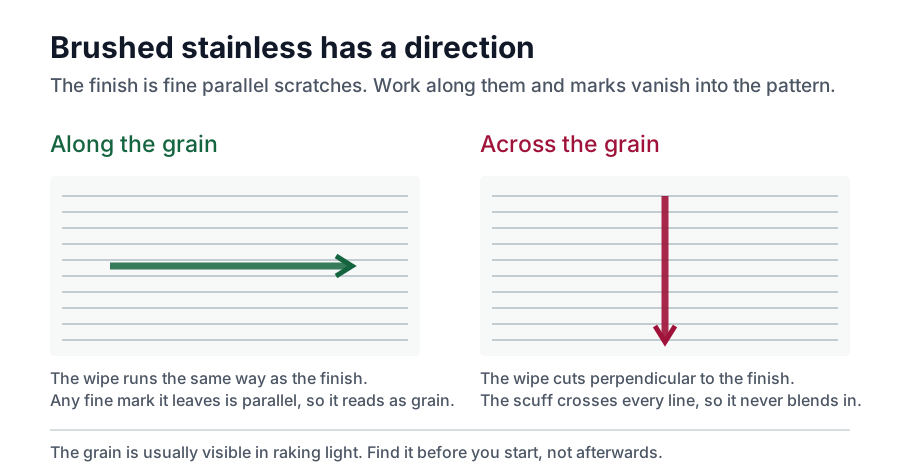
On a brushed or directional finish, the direction you wipe decides whether marks disappear into the pattern or cut across it permanently.
In detail
Most stainless steel in a kitchen carries a directional finish: a fine, consistent scratch pattern applied at manufacture, which is what gives brushed steel its appearance. Any cleaning that touches the surface at all adds to that pattern, and the only question is whether the new marks align with the existing ones or cross them. Marks running along the grain blend into a pattern the eye already reads as texture; marks running across it are visible from every angle and cannot be removed without refinishing the entire panel, because refinishing means re-establishing the pattern rather than polishing anything out. The trade guidance states the rule directly for abrasive pads — use them along the grain — and the same applies to cream cleansers, cloths carrying grit, and any scrubbing. The principle generalises beyond metal to any surface with a visible direction, and it costs nothing to observe, which is what makes it one of the most reliably useful habits in cleaning.
Why
- Cleaning along the grain is explained by Mechanical action and abrasion
Sources for this page
Sources
Care and Maintenance of Stainless Steel
British Stainless Steel Association, Stainless Steel Advisory Service, 2001 · Trade or professional body
Relied on for: That nylon-type abrasive pads are used on brushed and polished stainless finishes along the grain. (states this directly)
Cleaning methods for stainless steel
British Stainless Steel Association · Trade or professional body
Relied on for: That where a directional finish is being cleaned, the new scratch pattern should be aligned and blended with the original finish. (states this directly)