Porous and non-porous surfaces
On a hard surface, contamination sits on top. In a porous one it goes in — and the regulator's own answer for porous material is sometimes to throw it away.
In detail
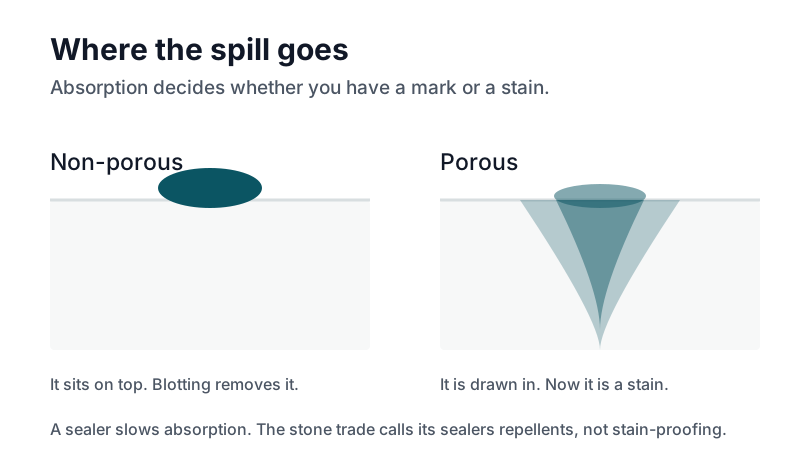
Whether a surface is porous decides whether cleaning can finish the job at all. On a hard, non-permeable surface, soil and organisms sit on top and the only question is whether the treatment reaches them. In a porous material, contamination goes IN — into the pore structure, the fibre, or the space behind a coating — where no wipe reaches it and where liquid treatments carry it deeper. The environmental regulator draws the line explicitly for mould. Its instruction for hard surfaces is to scrub the mould off with detergent and water and dry completely; for absorbent or porous materials such as ceiling tiles and carpet it says they may have to be thrown away. That is a striking thing for a cleaning authority to publish, and it is the honest answer: on a porous material, removing what is visible does not remove what has grown into it, so the mould returns and the cleaning was never the failure. The distinction is easy to miss, because porous is not the same as soft. Grout and unsealed stone are porous. Coated upholstery is a soft surface despite being smooth and non-permeable.
Why
- Mould is explained by Porous and non-porous surfaces
- Coated upholstery is explained by Porous and non-porous surfaces
The classification readers get wrong, and so do the products. Smooth and non-permeable is not the same thing as a hard surface.
- Chopping board surface is explained by Porous and non-porous surfaces
The whole wood-versus-plastic argument in one concept, and both sources decline to declare a winner while describing an asymmetry.
- Porcelain tile is explained by Porous and non-porous surfaces
The distinction is a NUMBER rather than a description. Porcelain is defined by water absorption of 0.5% or less; anything above that is not porcelain, whatever it looks like.
- Concrete and stone paving is explained by Porous and non-porous surfaces
- Mineral oil is explained by Porous and non-porous surfaces
- Sealing is explained by Porous and non-porous surfaces
- Mildew is explained by Porous and non-porous surfaces
- Travertine is explained by Porous and non-porous surfaces
- Sandstone is explained by Porous and non-porous surfaces
- Slate is explained by Porous and non-porous surfaces
- Unglazed ceramic tile is explained by Porous and non-porous surfaces
- Oiled wood is explained by Porous and non-porous surfaces
- Cement and mortar is explained by Porous and non-porous surfaces
- Alabaster is explained by Porous and non-porous surfaces
Where the sources disagree
Should chlorine bleach be used on household mould, and at what dilution?
Read side by side these bodies agree on far more than the disagreement suggests, and the agreement is the useful part. All three put MOISTURE CONTROL first and say the growth returns without it. All three make PHYSICAL REMOVAL with detergent and water the actual method. None presents bleach as the way mould is cleaned. What they differ on is whether an optional kill step afterwards earns its place — and the answer tracks the WATER, not the mould. Where the water was clean, the bleach step is merely offered and the federal guide declines to recommend it; where it was floodwater or sewage, both bodies that give dilutions positively recommend it, because the concern has shifted from mould to what else the water carried. The federal guide's reason for declining is not that bleach fails: it is that killing without removing leaves an allergenic residue, and that a background level of spores is normal once the area is dry.
What to do: Fix the water first — every source says the mould returns otherwise. Then remove the growth physically, scrubbing hard surfaces with detergent and water and drying completely; that is the method all three bodies give. Porous material that has grown mould — carpet, plasterboard, insulation, ceiling tiles — is discarded rather than treated, on every source. If you add a bleach step on a hard surface afterwards, that is a position two public bodies support and one declines to recommend; use the conditions they all agree on: dilute, ventilate, gloves and unvented eye protection, and never mix bleach with ammonia, with acids such as vinegar, or with any other product. Mould over about ten square feet, or after flooding or sewage, is not a cleaning job.
The sources are answering different questions
Sources for this page
Sources
United States Environmental Protection Agency (EPA) · Government or regulator
Relied on for: That mould on hard surfaces is scrubbed off with detergent and water and dried completely, and that absorbent or porous materials such as ceiling tiles and carpet may have to be thrown away if they become mouldy. (states this directly)
ACT Coated Fabric Selection Guide for Healthcare Upholstered Seating
Association for Contract Textiles · Trade or professional body
Relied on for: That coated fabrics are classified as soft-surface materials despite being smooth and non-permeable, so surface feel does not determine which cleaning rules apply. (states this directly)