Capillary absorption
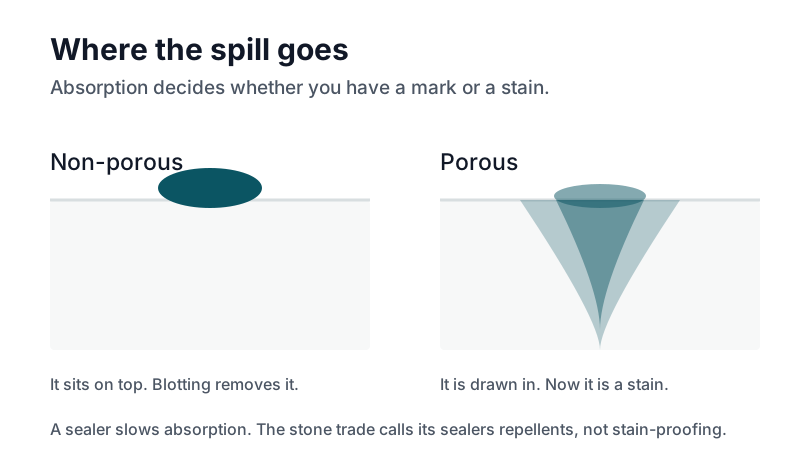
Liquid moves through a porous material on its own, and it moves outward. It is why a stain grows after you treat it, and why a powder can pull one back out.
In detail
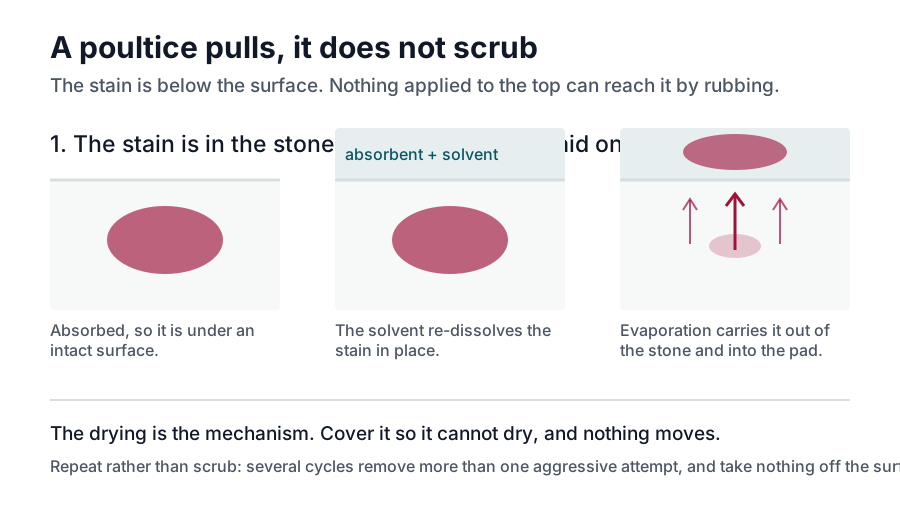
A porous material is a network of fine channels, and liquid moves through them without being pushed: surface tension draws it along, and it travels in every direction from where it landed. Three familiar problems are the same effect. A treated mark that ends up larger than it started has been carried outward by the solution used on it, which is why the trade procedures say to work from the EDGES of a spill towards the centre rather than the reverse. A ring or tidemark forms because the liquid front carries dissolved soil to its outer limit and stops there as it dries, depositing everything it was holding in a line. And a mark that reappears days later has wicked back up from deeper in the structure as the material dried. The same mechanism runs usefully in reverse. A dry absorbent powder placed on an oily deposit offers a drier, finer network than the material beneath it, so the oil moves upward into the powder and is carried away with it — the leather trade's cornstarch treatment for suede is exactly this. Wetting less, and drying faster, are therefore not fastidiousness; they are the direct controls on how far a problem travels.
Why
- Absorbent powder treatment is explained by Capillary absorption
- Dry soil removal is explained by Capillary absorption
Removing solids dry keeps liquid, and therefore the mark, from travelling through the material at all.
- Poultice is explained by Capillary absorption
- Memory foam is explained by Capillary absorption
- Aniline leather is explained by Capillary absorption
Dyed rather than finished. There is no surface film between the cleaner and the hide, which is why the darkening is immediate rather than gradual.
- Suede is explained by Capillary absorption
The lower split of the hide, with nap on both sides. It absorbs from both faces and has no finish on either.
- Sealing is explained by Capillary absorption
- Permanent marker is explained by Capillary absorption
- Food colouring is explained by Capillary absorption
- Travertine is explained by Capillary absorption
- Sandstone is explained by Capillary absorption
- Unglazed ceramic tile is explained by Capillary absorption
- Poultice is explained by Capillary absorption
Sources for this page
Sources
Spot Solver: spot and spill removal procedures
The Carpet and Rug Institute (CRI) · Trade or professional body
Relied on for: That solution is worked from the edges of a spill towards the centre to prevent spreading, and that a dry absorbent cleaning compound may substitute for wet treatment. (states this directly)
Leather Care and Cleaning Guide
The Leather Institute, 2011 · Trade or professional body
Relied on for: That cornstarch placed over an oil mark on suede draws the oil out as it coagulates with it, and that water-based soil is treated with a damp rather than soaked cloth, feathering the edges. (states this directly)
Technical Bulletin: Cleaning and Maintenance of Laminate Floor Coverings in the Home
EPLF — Association of European Producers of Laminate Flooring, 2022 · Trade or professional body
Relied on for: That moisture reaching a wood-based panel causes it to swell, which is why laminate is cleaned with a well-wrung cloth. (applied to this case rather than stated directly)