Aniline leather
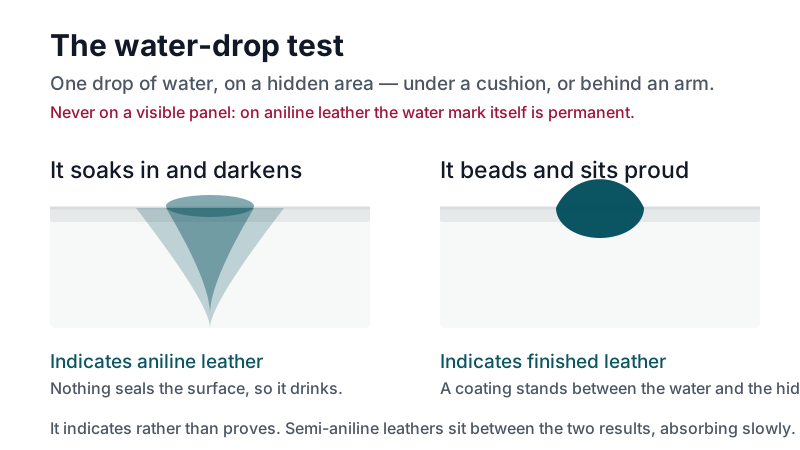
Dyed the way wood is stained rather than painted. There is no film on top, so anything spilled goes in — and the cleaner darkens it on contact.
What not to do
Detergent may damage Aniline leather
Best avoided
The available guidance advises against this.
Immediately, and permanently. The darkening is absorption into the hide rather than a residue that can be wiped back off.
Evidence
Supported
Sources
Leather Care and Cleaning Guide
The Leather Institute, 2011 · Trade or professional body
Relied on for: That cleaning agents will immediately darken nude leather, which is porous and dyed rather than finished. (states this directly)
Precautions
- Test on an inconspicuous area first
- Check the manufacturer's instructions
- Consider professional help
In detail
The trade guide draws the distinction with an analogy worth keeping: aniline leathers are dyed only with transparent colours, similar to staining wood, as opposed to finished leathers which carry opaque pigments on the surface, similar to paint. The consequence is stated plainly — aniline is characterised by the LACK OF FILM FORMERS on the surface, and is therefore porous and will absorb what is spilled on it. Two things make it the hardest leather to clean. Cleaning agents immediately darken nude leather, so the first application is the result. And deionised water is specified, because hard water leaves rings. Water-based soil takes a damp — not soaked — cloth, rubbed gently while feathering the edges. Oil and grease take the absorbent route first: cornstarch over the mark, rubbed gently with a finger until it coagulates with the oil, repeated as needed, and only then a cloth dampened with odourless mineral spirits. The guide adds a sentence worth carrying to every other material: cleaning does not necessarily equate to cosmetic improvement.
Properties
Sensitivity
- Acids
- Not known
- Alkalis
- Sensitive
- Chlorine bleach
- Not known
- Heat
- Sensitive
- Abrasion
- Sensitive
- Porous
- Sensitive
“Not known” means nobody has established this, not that the material is unaffected.
Why
- Aniline leather is explained by Capillary absorption
Dyed rather than finished. There is no surface film between the cleaner and the hide, which is why the darkening is immediate rather than gradual.
Related
- Aniline leather is commonly affected by Oil and grease on textile
- Aniline leather is commonly affected by Water marks
When the obvious answer is wrong
There is a greasy mark on my aniline leather sofa. Can I use a leather cleaner on it?
Aniline leather is not finished leather. The trade body describes it as porous and DYED rather than coated, and states plainly that cleaning agents will immediately darken nude leather. There is no surface film between the cleaner and the hide, so the liquid goes in rather than sitting on top, and the darkening is absorption into the leather rather than a residue that can be wiped back off. The trade body's prohibition list for finished leather is about protecting a water-based FINISH; aniline has no finish to protect, which makes it more vulnerable rather than less.
A different kind of treatment works: Go dry, and go first. The trade body's own procedure for oil or grease on leather starts with cornstarch placed over the mark and rubbed gently with a finger until it coagulates with the oil, repeated as necessary — the absorbent lifts what it can before anything wet is introduced, and on a porous hide that is the only step that carries no darkening risk at all. Where the mark persists after that, the honest position is that the solvent step given for FINISHED leather does not extend to aniline, and that an unfinished dyed hide is the case the trade calls difficult. Treat a visible test in a hidden place as compulsory rather than advisable, and a valued piece as a job for a leather specialist. Finished leather and this material are not interchangeable: what is safe on one is not safe on the other, so identify which you have before touching it.
Sources for this page
Sources
Leather Care and Cleaning Guide
The Leather Institute, 2011 · Trade or professional body
Relied on for: That aniline leathers are dyed only with transparent colours, lack film formers and are porous, that cleaning agents immediately darken nude leather, that deionised water is specified because hard water may cause rings, and that cleaning does not necessarily equate to cosmetic improvement. (states this directly)