Sacrificial protection
Galvanised steel survives by having a metal that corrodes faster bolted to it. Cleaning that metal off is not cleaning — it is spending the protection.
In detail
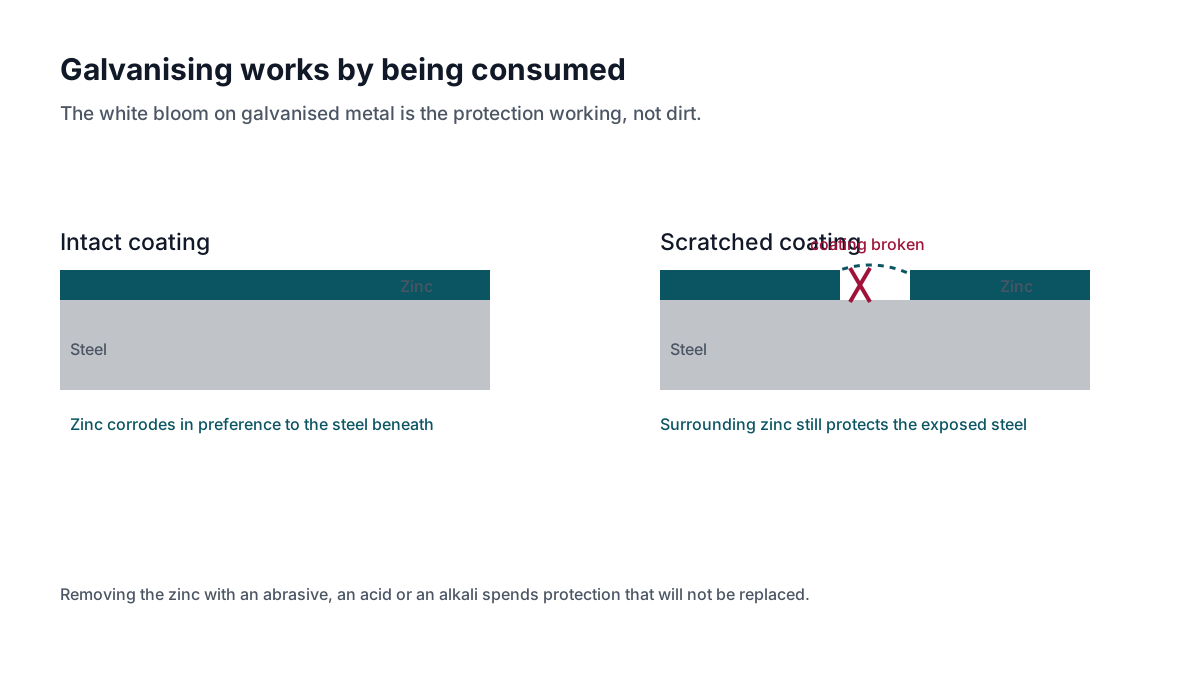
When two different metals are in electrical contact in the presence of moisture, the more reactive one corrodes preferentially and the less reactive one is protected. Galvanising uses that deliberately: a zinc coating on steel corrodes in place of the steel, and it continues to protect even where the coating is scratched, because the zinc nearby is still doing the work. The same principle is why a sacrificial anode sits inside a hot water cylinder. It changes how galvanised metalwork should be cleaned, and the change is counter-intuitive. The white powdery bloom on a galvanised gutter, bin or watering can is a zinc corrosion product, and it is the protection working; scrubbing it away with an abrasive or dissolving it with an acid or an alkali removes zinc that will not be replaced, and shortens the component's life. Regulator fact sheets record the alkaline half of that plainly, with trisodium phosphate and potassium hydroxide both attacking zinc and galvanised iron. The corollary matters too: mixing metals in contact — a steel screw in an aluminium frame, a copper pipe against galvanised steel — sets up the same cell unintentionally.
Why
- Galvanised steel is explained by Sacrificial protection
Sources for this page
Sources
Right to Know Hazardous Substance Fact Sheet: Sodium Phosphate, Tribasic (RTK 1724)
New Jersey Department of Health · Government or regulator
Relied on for: That trisodium phosphate solutions react with aluminium, zinc and galvanised iron to produce hydrogen gas. (states this directly)
Right to Know Hazardous Substance Fact Sheet: Potassium Hydroxide (RTK 1571)
New Jersey Department of Health, 2010 · Government or regulator
Relied on for: That potassium hydroxide is corrosive in moist air to metals including zinc. (states this directly)