Galvanised steel
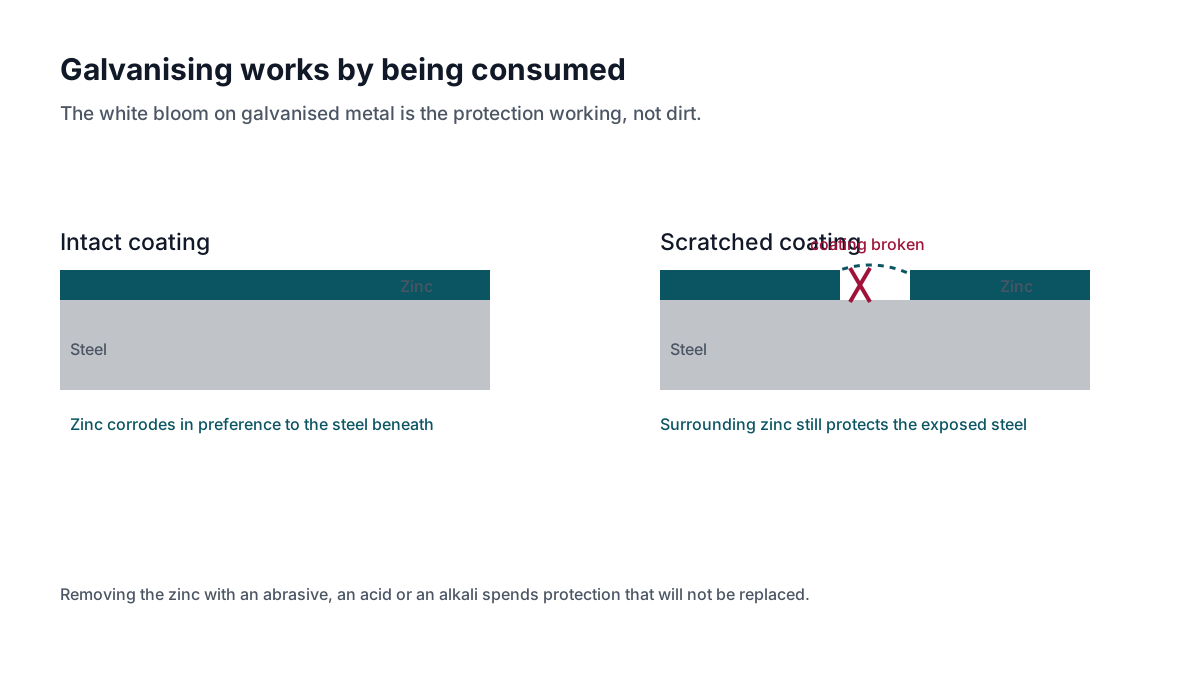
Steel protected by a sacrificial zinc layer. Alkaline cleaners dissolve that layer and give off hydrogen doing it, leaving the steel exposed.
What not to do
Potassium hydroxide is unsafe on Galvanised steel
Unsafe
Do not do this. The risk is established, and it is described below.
Precautions
- Wear gloves
- Wear eye protection
Evidence
Strongly supported
Sources
Right to Know Hazardous Substance Fact Sheet: Potassium Hydroxide (RTK 1571)
New Jersey Department of Health, 2010 · Government or regulator
Relied on for: That potassium hydroxide is corrosive in moist air to metals including zinc. (states this directly)
Trisodium phosphate is unsafe on Galvanised steel
Unsafe
Do not do this. The risk is established, and it is described below.
Precautions
- Wear gloves
- Ventilate the area
Evidence
Strongly supported
Sources
Right to Know Hazardous Substance Fact Sheet: Sodium Phosphate, Tribasic (RTK 1724)
New Jersey Department of Health · Government or regulator
Relied on for: That trisodium phosphate solutions react with galvanised iron to produce flammable hydrogen gas. (states this directly)
Ammonia is unsafe on Galvanised steel
Unsafe
Do not do this. The risk is established, and it is described below.
Precautions
- Ventilate the area
- Wear gloves
Evidence
Strongly supported
Sources
Right to Know Hazardous Substance Fact Sheet: Ammonium Hydroxide (RTK 0103)
New Jersey Department of Health, 2011 · Government or regulator
Relied on for: That copper, aluminium and galvanised metals must not be used when handling ammonium hydroxide. (states this directly)
Acetic acid (vinegar) is unsafe on Galvanised steel
Unsafe
Do not do this. The risk is established, and it is described below.
Precautions
- Wear gloves
- Ventilate the area
Evidence
Supported
Sources
Right to Know Hazardous Substance Fact Sheet: Acetic Acid (RTK 0004)
New Jersey Department of Health, 2016 · Government or regulator
Relied on for: That acetic acid attacks many metals forming flammable and explosive hydrogen gas. (states this directly)
In detail
Galvanising coats steel with zinc, which corrodes in preference to the steel underneath — a sacrificial protection that works only for as long as the zinc lasts. Anything that consumes the zinc faster than weather would is therefore shortening the life of the component rather than cleaning it, and alkalis are the main culprit. A state health department's fact sheets record it plainly from three directions: trisodium phosphate in water solution reacts with aluminium, zinc and galvanised iron to produce flammable hydrogen gas; potassium hydroxide is corrosive in moist air to zinc among other metals, again forming hydrogen; and ammonium hydroxide carries an explicit instruction not to use copper, aluminium or galvanised metals when handling it. That rules out caustic degreasers, sugar-soap products, ammonia-based cleaners and oven cleaner on galvanised gutters, sheds, dustbins, watering cans and fencing. Acids attack the zinc too, so the workable range is narrow: a neutral detergent, a soft brush and a rinse. White powdery deposits on galvanised metal are zinc corrosion products rather than dirt, and scrubbing them off removes more of the coating than leaving them alone would.
Properties
Sensitivity
- Acids
- Sensitive
- Alkalis
- Sensitive
- Chlorine bleach
- Not known
- Abrasion
- Sensitive
- Porous
- Not applicable
“Not known” means nobody has established this, not that the material is unaffected.
Why
- Galvanised steel is explained by Sacrificial protection
- Galvanised steel is explained by Alkali attack on light metals
- Galvanised steel is explained by Corrosion and passivation
Related
- Galvanised steel is commonly affected by Algae
- Galvanised steel is commonly affected by Rust
- Galvanised steel is commonly affected by Moss and lichen
Hacks and claims involving this
Sources for this page
Sources
Right to Know Hazardous Substance Fact Sheet: Sodium Phosphate, Tribasic (RTK 1724)
New Jersey Department of Health · Government or regulator
Relied on for: That trisodium phosphate in water solution reacts with aluminium, zinc and galvanised iron to produce flammable hydrogen gas. (states this directly)
Right to Know Hazardous Substance Fact Sheet: Ammonium Hydroxide (RTK 0103)
New Jersey Department of Health, 2011 · Government or regulator
Relied on for: That copper, aluminium and galvanised metals must not be used when handling ammonium hydroxide. (states this directly)