Why made-up objects fail where they are glued
The part that fails is almost never the part being cleaned. It is the joint underneath, and it fails quietly, weeks later.
In detail
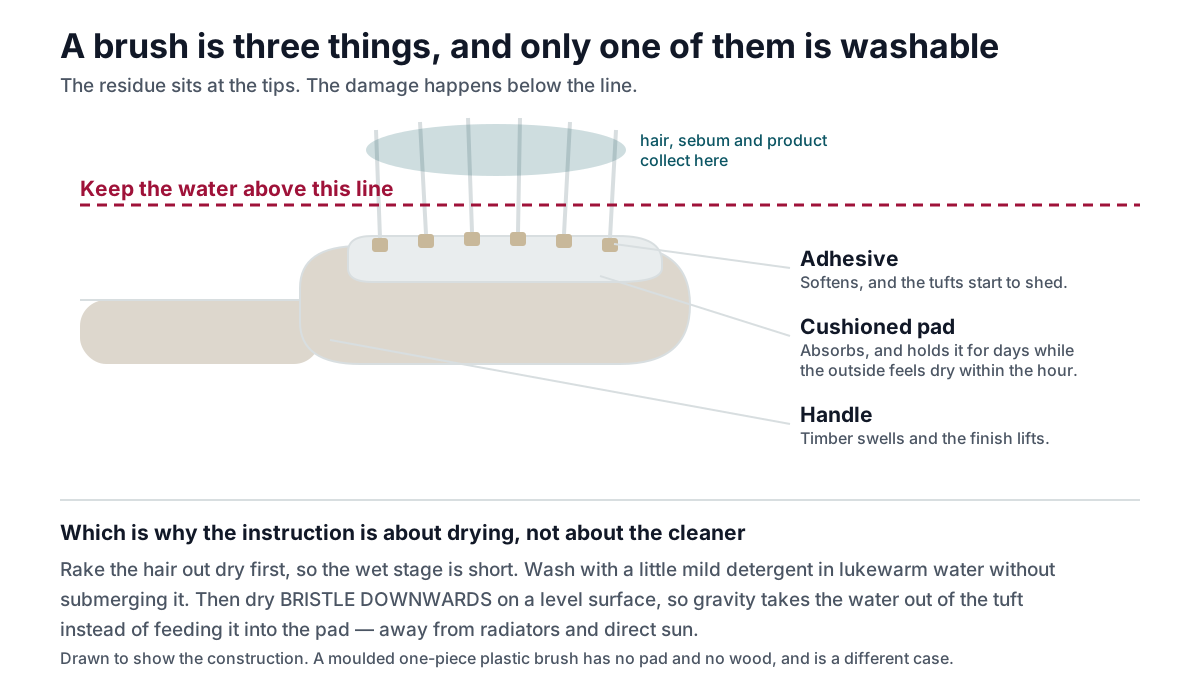
A great many household objects are assemblies held together with adhesive: a brush head in a handle, a trainer's upper to its sole, a mirror to its backing, a lampshade to its frame. Water reaching that joint softens or dissolves the bond, and three unrelated authorities here say so about three unrelated objects. A dermatology body: submerging a brush head will eventually dissolve the glue connecting it to the handle. A brush manufacturer: wash the brush ensuring water does not reach the wood, and do not submerge it. A footwear maker: a washing machine breaks down the glue, foam and mesh forming a shoe's internal structure. THE WORD IN THE FIRST OF THOSE IS THE IMPORTANT ONE — eventually. A soaked brush works fine that evening. The failure is cumulative, arrives long after the cleaning that caused it, and therefore never gets blamed on it, which is why the practice survives. Two consequences follow. Submersion is the wrong shape of method for any glued assembly, however dirty it is; and drying ORIENTATION matters, because a joint that has taken on water needs gravity working away from it rather than towards it. Dry the tips downward, not the handle downward.
Why
- Brush handle and pad is explained by Why made-up objects fail where they are glued
- Makeup brush is explained by Why made-up objects fail where they are glued
- Trainers is explained by Why made-up objects fail where they are glued
Sources for this page
Sources
How to clean your makeup brushes
American Academy of Dermatology Association · Trade or professional body
Relied on for: That submerging the whole brush head will eventually dissolve the glue connecting the brush head to the handle, and that only the tip should be rinsed. (states this directly)
G.B. Kent & Sons plc (Kent Brushes) · Manufacturer documentation
Relied on for: That the brush must not be submerged, that water must not reach the wood, and that it dries bristle-down. (states this directly)
Can I Put Shoes in the Washing Machine?
Altra Running (VF Corporation) · Manufacturer documentation
Relied on for: That machine washing breaks down the glue, foam and mesh that make up the internal structure of a shoe. (states this directly)