Brush handle and pad
The part that is not supposed to get wet, on a tool people clean by putting it in water. Almost every ruined brush failed here.
In detail
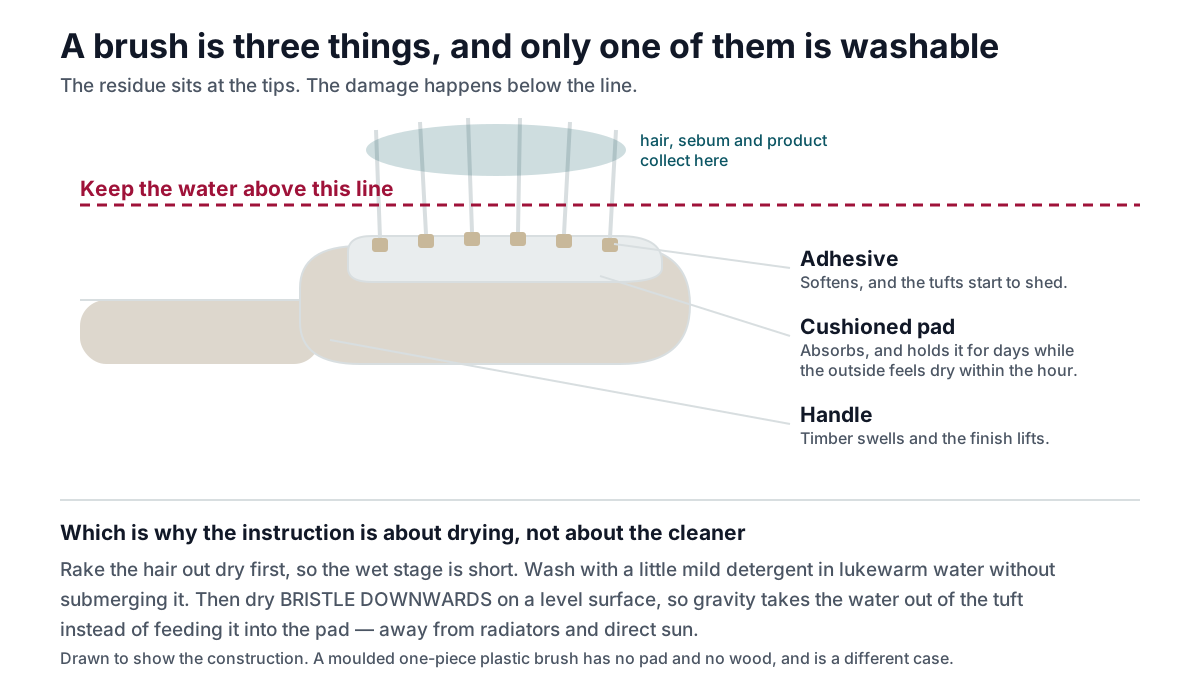
Everything below the fibres: the handle — usually timber, sometimes moulded plastic — the cushioned pad the tufts sit in, and the adhesive holding them together. It is where a brush actually fails, and it is invisible while it is failing. The maker's instruction is written about this part rather than the bristles — wash the brush ensuring water does not reach the wood, and do not submerge it. A dermatology body says the same from another direction about a different brush: submerging the head eventually dissolves the glue connecting it to the handle, so only the tips are rinsed. Two unrelated authorities, one failure mode. Water that reaches the handle and the glue does its damage slowly. The control is drying orientation rather than a product. Bristle DOWN on a level surface, so gravity takes water out of the tuft instead of feeding it into the pad — and away from radiators and direct sun.
Why
- Brush handle and pad is explained by Why made-up objects fail where they are glued
Sources for this page
Sources
G.B. Kent & Sons plc (Kent Brushes) · Manufacturer documentation
Relied on for: That the brush is washed ensuring water does not reach the wood, that it must not be submerged, and that it dries bristle-down on a level surface away from heat and direct sunlight. (states this directly)
How to clean your makeup brushes
American Academy of Dermatology Association · Trade or professional body
Relied on for: That submerging the whole brush head will eventually dissolve the glue connecting the head to the handle, so only the tip is rinsed. (states this directly)