Hairbrush
A wooden object with fibres in it, and the wood is the part that fails. Nearly every ruined hairbrush was ruined in a sink.
What not to do
Soaking is unsafe on Hairbrush
Unsafe
Do not do this. The risk is established, and it is described below.
The maker states it directly: do not submerge. What fails is the pad, the wood and the adhesive under the tufts, and the damage builds up over repeated washes.
Evidence
Strongly supported
Sources
G.B. Kent & Sons plc (Kent Brushes) · Manufacturer documentation
Relied on for: That the hairbrushes must not be submerged in the water and that the water must not reach the wood. (states this directly)
How to clean your makeup brushes
American Academy of Dermatology Association · Trade or professional body
Relied on for: That submerging a brush head will eventually dissolve the glue connecting it to the handle. (states this directly)
Start here
What this is, what tends to go wrong with it, and what to do about it.
Which part are you cleaning?
These parts take different answers. Cleaning one the way you clean another is a common way to damage this.
- Brush handle and pad
The part that is not supposed to get wet, on a tool people clean by putting it in water. Almost every ruined brush failed here.
What tends to go wrong
- Hair· no established method
Not a stain and not really a soil — a keratin fibre that tangles, holds everything else, and defeats every wet method by floating.
- Skin oil· no established method
The soil that arrives everywhere a person touches, gets darker as it ages, and is the reason a clean-looking surface still feels tacky.
In detail
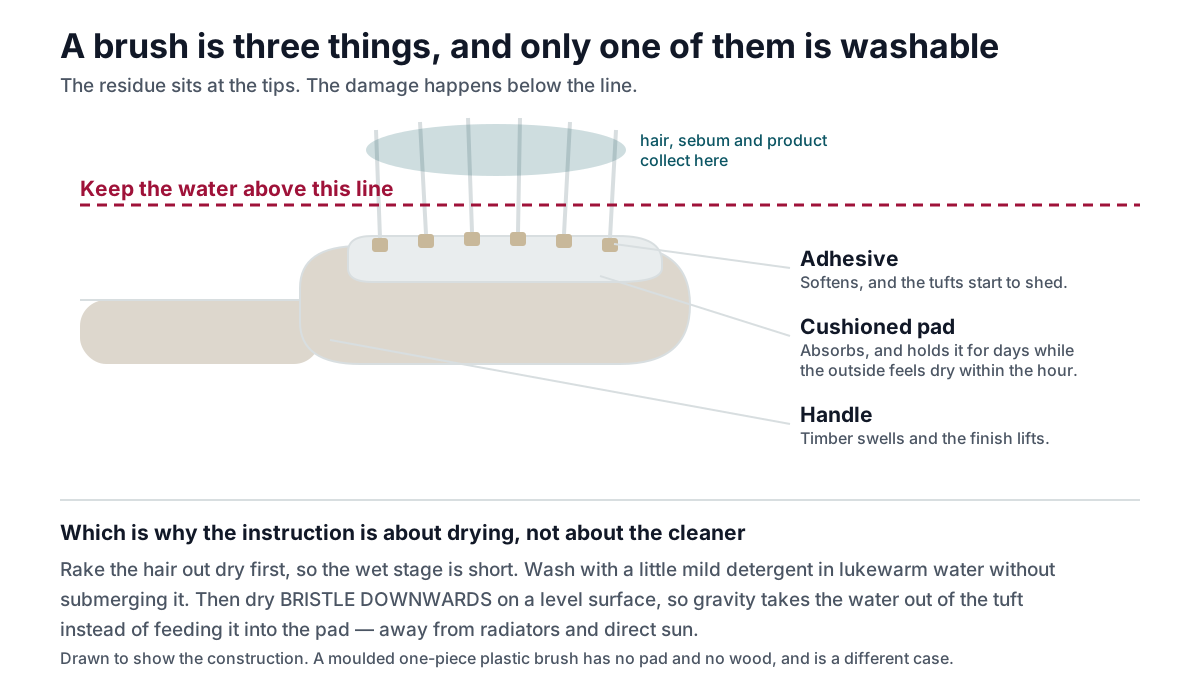
The maker's instruction is not about the bristles at all. Wash in lukewarm water with a little shampoo or mild detergent, 'ensuring that the water does not reach the wood', and do not submerge the brush. A hairbrush is a handle, a cushioned pad and a tuft assembly, and water that gets past the tuft into the pad and the wood swells the timber, lifts the finish and loosens the bond holding everything together. The order is dry first. Loose hair comes out with a raking tool before anything wet happens, because a tuft packed with hair holds water and the point of the exercise is to get water OUT. Drying is directional and it is the step people skip. Bristle pointing DOWNWARDS on a level surface, so water leaves the tuft under gravity instead of running back into the pad. No radiator, no hairdryer, no windowsill in the sun. What accumulates is a mixture rather than a soil: shed hair, sebum from the scalp, skin cells, and the residue of whatever was put on the hair. The sebum is why a rinse alone does not work and a mild detergent does, and it is the same body oil that collects on a leather armrest.
What works
Detergent is safe on, in specific conditions, Hairbrush
Safe only in specific conditions
This is only appropriate within specific limits, and nothing is established outside them.
Only within these limits:
- A little shampoo or mild detergent in a bowl of LUKEWARM water
- Do not submerge the brush, and keep the water off the wood
- Rake the loose hair out dry first, so the wet stage stays short
- Dry bristle DOWNWARDS on a level surface, away from heat and direct sun
The conditions are all about duration and orientation rather than about concentration, which is unusual — the risk here is water reaching a place it cannot leave.
Evidence
Strongly supported
Sources
G.B. Kent & Sons plc (Kent Brushes) · Manufacturer documentation
Relied on for: That the brush is washed in lukewarm water with a little shampoo or mild detergent without submerging it or letting water reach the wood, that hair is combed out first, and that it dries bristle-down away from heat and sunlight. (states this directly)
Related
Hacks and claims involving this
- Soaking a hairbrush to clean it Does not work
Sources for this page
Sources
G.B. Kent & Sons plc (Kent Brushes) · Manufacturer documentation
Relied on for: That a hairbrush is washed in lukewarm water with a little shampoo or mild detergent, that the water must not reach the wood, that the brush must not be submerged, that loose hair is combed out first with a dedicated cleaner, that the brush dries bristle-down on a level surface, and that direct heat and sunlight are excluded. (states this directly)
How to clean your makeup brushes
American Academy of Dermatology Association · Trade or professional body
Relied on for: That submerging a brush head dissolves the glue connecting the head to the handle, and that only the tips should be rinsed. (states this directly)