Microfibre
A split synthetic fibre whose cleaning power is structural rather than chemical — which is why filling that structure with anything, including fabric conditioner, destroys it.
What not to do
Fabric conditioner is unsafe on Microfibre
Unsafe
Do not do this. The risk is established, and it is described below.
It does not damage the cloth so much as switch it off, and nothing about the cloth shows it.
Evidence
Supported
Sources
The dos and don'ts on how to wash microfiber cloths and mop heads
Unger Global · Manufacturer documentation
Relied on for: That fabric softeners clog the fine microfibre fibres and reduce their ability to pick up dirt and moisture. (states this directly)
Tumble drying may damage Microfibre
Best avoided
The available guidance advises against this.
Evidence
Supported
Sources
The dos and don'ts on how to wash microfiber cloths and mop heads
Unger Global · Manufacturer documentation
Relied on for: That exposing microfibre to high heat in the washing machine or dryer can cause the fine fibres to melt or become damaged. (states this directly)
Sodium hypochlorite (chlorine bleach) may damage Microfibre
Best avoided
The available guidance advises against this.
From an equipment maker's laundering guidance for microfibre cloths and mop heads. It puts bleach alongside harsh detergents, dyes, fragrances, brighteners and oil-based soaps as things that break the fibres down.
Evidence
Supported
Sources
The dos and don'ts on how to wash microfiber cloths and mop heads
Unger Global · Manufacturer documentation
Relied on for: That harsh detergents and stain removers with dyes, fragrances and brighteners, oil-based soaps and bleach can break down microfibre and impair its performance. (states this directly)
Precautions
- Check the manufacturer's instructions
In detail
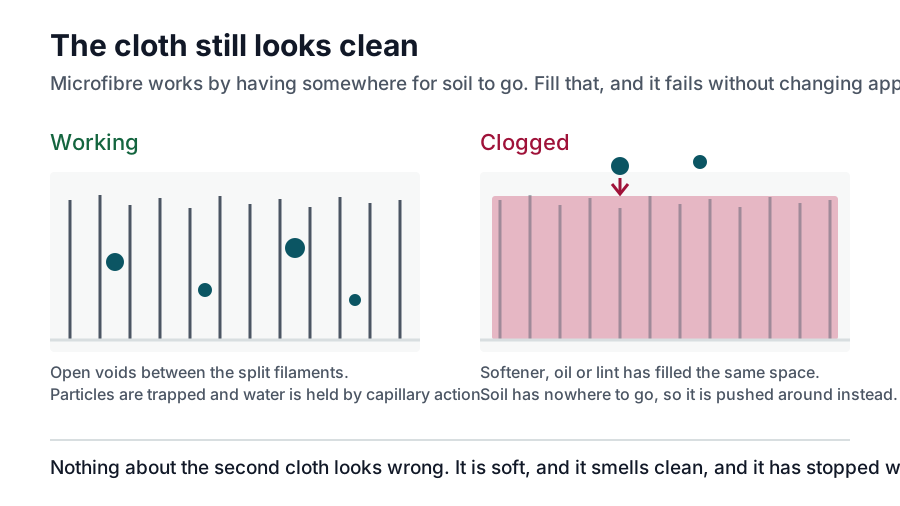
Microfibre is polyester and polyamide extruded together and then split into filaments far finer than a natural fibre. The cleaning behaviour comes from what that does to the surface: an enormous amount of edge and void per square centimetre, trapping particles mechanically and holding water by capillary action. It cleans by structure, not chemistry — the whole of its strength and its vulnerability. Anything that fills the voids ends the effect. The professional guidance is blunt about the commonest cause: fabric softeners clog the fine fibres and reduce their ability to pick up dirt and moisture. The cloth comes out looking clean, soft and correct, and no longer works. Harsh detergents, stain removers carrying dyes, fragrances and brighteners, oil-based soaps and bleach are named alongside as breaking the fibres down. Heat is the second failure. The filaments are fine enough to melt, so the instruction is cold or lukewarm water and air-drying or the lowest dryer setting. Loading matters as much as chemistry: washed with cotton, microfibre collects the cotton's lint in exactly the structure meant to collect dirt.
What works
Machine washing is safe on, in specific conditions, Microfibre
Safe only in specific conditions
This is only appropriate within specific limits, and nothing is established outside them.
Only within these limits:
- Cold or lukewarm water — never hot; the filaments are fine enough to melt
- A mild liquid detergent. Delicate or 'free and clear' formulations are the ones named
- No fabric softener, bleach, oil-based soap, or stain remover carrying dyes, fragrances or brighteners
- Washed on their own, never with cotton towels or mops, which shed lint into the fibre
Every limit here is about keeping the structure open. The fibre does its work by having somewhere for soil to go, and each prohibited product fills that space with something else.
Precautions
- Check the manufacturer's instructions
Evidence
Supported
Sources
The dos and don'ts on how to wash microfiber cloths and mop heads
Unger Global · Manufacturer documentation
Relied on for: That microfibre is washed in cold or lukewarm water with a mild liquid detergent, without fabric softener or harsh detergents, and separately from lint-prone items such as cotton towels. (states this directly)
Why
- Microfibre is explained by Clogging the thing that does the work
Aftercare and prevention
- Machine washing requires the aftercare Microfibre
Air-dry it. The dryer is the other way to melt the fibre you just protected in the wash.
Sources for this page
Sources
The dos and don'ts on how to wash microfiber cloths and mop heads
Unger Global · Manufacturer documentation
Relied on for: That fabric softeners clog the fine fibres and reduce their ability to pick up dirt and moisture; that harsh detergents, stain removers with dyes, fragrances and brighteners, oil-based soaps and bleach break the fibres down; that high heat in the washer or dryer can melt or damage them; and that microfibre must not be washed with lint-prone items such as cotton towels. (states this directly)