Machine washing
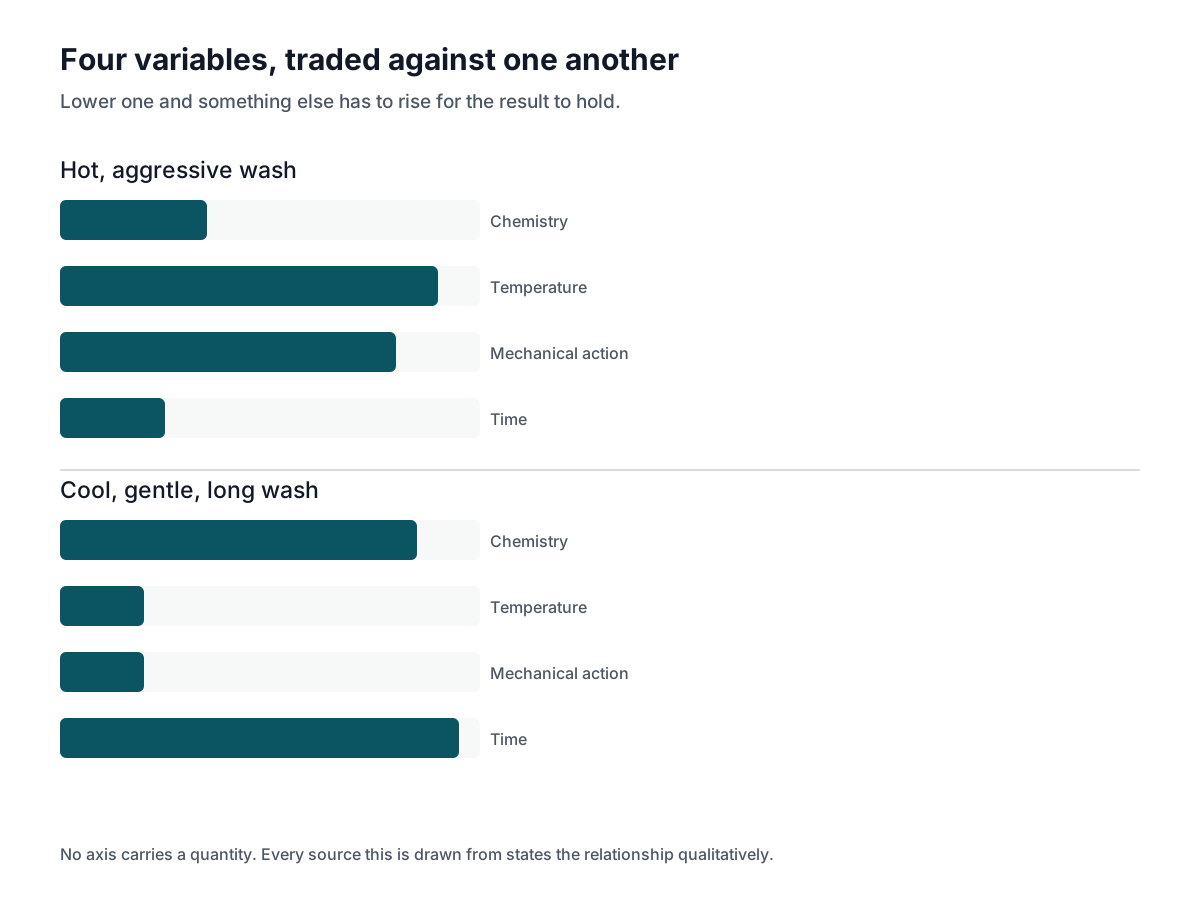
Four variables the machine sets for you, and a care label that constrains two of them. The label is issued for the garment, not for the fibre.
What not to do
Machine washing should be avoided for Upholstery fabric
Best avoided
The available guidance advises against this.
Aimed at the thing people actually do: unzip the cushion cover and put it through the wash. Every code that permits liquid at all says not to.
Evidence
Supported
Sources
Woven & Knit Residential Upholstery Fabric Standards & Guidelines
Joint Industry Fabric Standards and Guidelines Committee, via the American Home Furnishings Alliance (AHFA) · Standards body
Relied on for: That under W cushion covers should not be removed and laundered, under S not removed and dry-cleaned, and under WS not removed and laundered or dry-cleaned. (states this directly)
Machine washing is unsafe on Trainers
Unsafe
Do not do this. The risk is established, and it is described below.
The maker refuses it at every temperature, and the damage is to the adhesive and the foam rather than to the surface — which is why the shoe looks fine afterwards and stops behaving as it did.
Evidence
Strongly supported
Sources
Can I Put Shoes in the Washing Machine?
Altra Running (VF Corporation) · Manufacturer documentation
Relied on for: That the maker advises against the washing machine, that the cycle breaks down the glue, foam and mesh forming the internal structure, that a hot wash reaches around 130°F or hotter, and that the consequence is loss of structural integrity. (states this directly)
Machine washing is unsafe on Trainer midsole
Unsafe
Do not do this. The risk is established, and it is described below.
The part the prohibition is actually about. No authoritative source gives any cleaning method for a midsole at all.
Evidence
Strongly supported
Sources
Can I Put Shoes in the Washing Machine?
Altra Running (VF Corporation) · Manufacturer documentation
Relied on for: That machine washing breaks down the glue and foam forming the shoe's internal structure, causing loss of structural integrity. (states this directly)
In detail
A wash cycle applies chemistry, temperature, mechanical action and time, and the machine fixes three of them once a programme is chosen. What decides the programme is the care label, and the reason the label outranks anything general about the fibre is worth understanding: it is issued for the made-up garment, accounting for its dyes, finishes, interlinings and trims, any of which may impose a tighter limit than the main fibre would. A wool-blend jacket may be labelled dry-clean-only because of its interfacing. The international symbol system covers washing, bleaching, drying, ironing and professional textile care, and the symbols indicate the maximum severity of treatment the article can withstand without irreversible damage — a ceiling rather than a recommendation, which is why washing cooler than the label says is always permitted and washing hotter is not. Two mechanisms cause most laundry damage and both are mechanical rather than chemical. Agitation felts wool irreversibly, because the fibre's scales interlock when moved while wet and warm. And a load packed tight cleans badly, because mechanical action needs room to happen.
What works
Machine washing is effective against Cellulolytic microorganisms Supported
Machine washing is safe on, in specific conditions, Microfibre
Safe only in specific conditions
This is only appropriate within specific limits, and nothing is established outside them.
Only within these limits:
- Cold or lukewarm water — never hot; the filaments are fine enough to melt
- A mild liquid detergent. Delicate or 'free and clear' formulations are the ones named
- No fabric softener, bleach, oil-based soap, or stain remover carrying dyes, fragrances or brighteners
- Washed on their own, never with cotton towels or mops, which shed lint into the fibre
Every limit here is about keeping the structure open. The fibre does its work by having somewhere for soil to go, and each prohibited product fills that space with something else.
Precautions
- Check the manufacturer's instructions
Evidence
Supported
Sources
The dos and don'ts on how to wash microfiber cloths and mop heads
Unger Global · Manufacturer documentation
Relied on for: That microfibre is washed in cold or lukewarm water with a mild liquid detergent, without fabric softener or harsh detergents, and separately from lint-prone items such as cotton towels. (states this directly)
Machine washing is safe on, in specific conditions, Pillow
Safe only in specific conditions
This is only appropriate within specific limits, and nothing is established outside them.
Only within these limits:
- cotton, down or synthetic fillings only; foam pillows are wiped, never washed
- two pillows at a time, to balance the drum
- a gentle cycle with mild detergent unless the care label says otherwise
- the care label's own instructions take precedence; no temperature is given
Precautions
- Check the manufacturer's instructions
Evidence
Supported
Sources
How To Wash Pillows At Home Like an Expert
Bed Advice UK — The National Bed Federation · Trade or professional body
Relied on for: That cotton, down and synthetic pillows are generally safe to machine wash while foam pillows should be cleaned by wiping, that two pillows are loaded at a time to balance the drum, that a gentle cycle with mild detergent is used unless the care instructions say otherwise, and that the care tag is always checked. (states this directly)
Why
- Machine washing is explained by How care labels work
- Machine washing is explained by The four variables
- Machine washing is explained by Fibre swelling and shrinkage
- Machine washing is explained by Laundry risk categories
Aftercare and prevention
- Machine washing requires the aftercare Dishcloth
Drying is the half of the instruction that gets dropped, and it is the half that matters.
- Machine washing requires the aftercare Microfibre
Air-dry it. The dryer is the other way to melt the fibre you just protected in the wash.
- Machine washing requires the aftercare Oven glove
Dry it thoroughly.
Sources for this page
Sources
GINETEX Technical Booklet — international care labelling system
GINETEX, The International Association for Textile Care Labelling, 2018 · Standards body
Relied on for: That the care-labelling system covers washing, bleaching, drying, ironing and professional textile care, and that the symbols indicate the maximum severity of treatment the article can withstand without irreversible damage. (states this directly)
Wool care: how to wash wool, and caring for wool
The Woolmark Company · Trade or professional body
Relied on for: That wool is damaged by agitation when wet and that the care label governs the treatment of the finished garment. (states this directly)