Clogging the thing that does the work
Some cleaning tools work by their structure rather than by chemistry. Fill the structure and the tool fails silently — it still looks right.
In detail
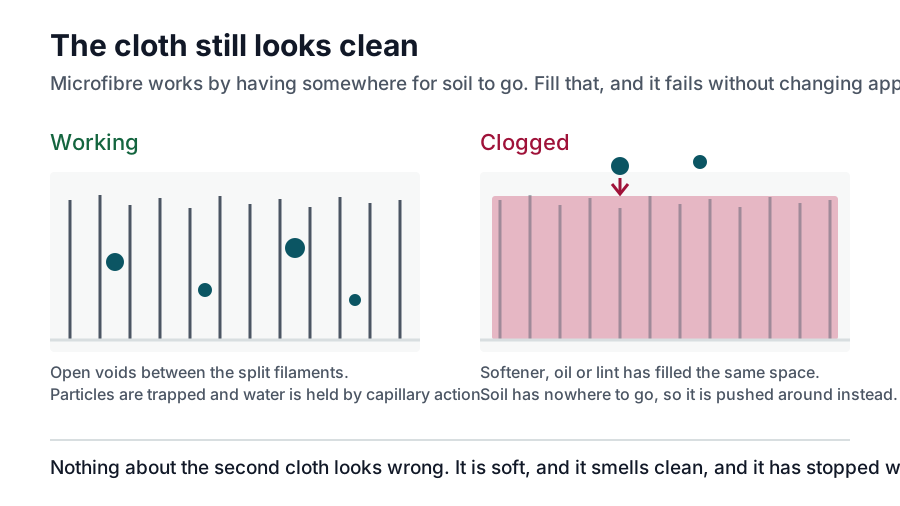
A microfibre cloth, a HEPA filter, an extractor mesh and a polishing pad share a design: the work is done by a very large internal surface with a very large number of voids. Nothing about them is chemically active. They function because there is somewhere for the soil to go. That creates a failure mode ordinary cleaning does not have. When the voids fill — with fabric conditioner, oil, fine dust, softener wax — performance collapses while APPEARANCE DOES NOT CHANGE. The cloth is soft and smells clean. The pad is intact. Nothing announces that the tool has stopped working, so the user concludes the surface is the problem and cleans harder. The diagnostic is behavioural rather than visual: a cloth that has stopped absorbing, that pushes water around instead of taking it up, or that leaves streaks where it left none, is clogged rather than dirty. Washing it again with the same product will not help, because the product is the cause. The rule that follows: never add a conditioning, softening or coating product to a tool whose function is capture.
Why
- Microfibre is explained by Clogging the thing that does the work
- HEPA filter is explained by Clogging the thing that does the work
The same failure in different equipment: capture depends on open structure, and a loaded filter looks much like a clean one.
- Vacuum cleaner is explained by Clogging the thing that does the work
A loaded bag and filter is the same failure as a softener-clogged cloth: capture depends on somewhere for the soil to go.
- ULPA filter is explained by Clogging the thing that does the work
- Backpack vacuum is explained by Clogging the thing that does the work
- Crush-proof hose is explained by Clogging the thing that does the work
- Vacuum bag is explained by Clogging the thing that does the work
- Washing machine drain filter is explained by Clogging the thing that does the work
It works by catching things. When it has caught enough, it stops working — and the symptom is the machine, not the filter.
- Vacuum cleaner is explained by Clogging the thing that does the work
- Dishwasher filter is explained by Clogging the thing that does the work
It works by catching things. When it has caught enough, the machine — not the filter — is what appears to fail.
- Lint filter is explained by Clogging the thing that does the work
It works by filling up with what it catches, which is why the manual sets its interval by the load rather than leaving it to appearance.
Sources for this page
Sources
The dos and don'ts on how to wash microfiber cloths and mop heads
Unger Global · Manufacturer documentation
Relied on for: That fabric softeners clog the fine microfibre fibres and reduce their ability to pick up dirt and moisture, and that the tool's cleaning effectiveness is impaired by residues and by lint from other fabrics. (states this directly)