Why a stain comes back after it dries
The mark you removed was the top of a column. What was left at the bottom travels back up as the water leaves.
In detail
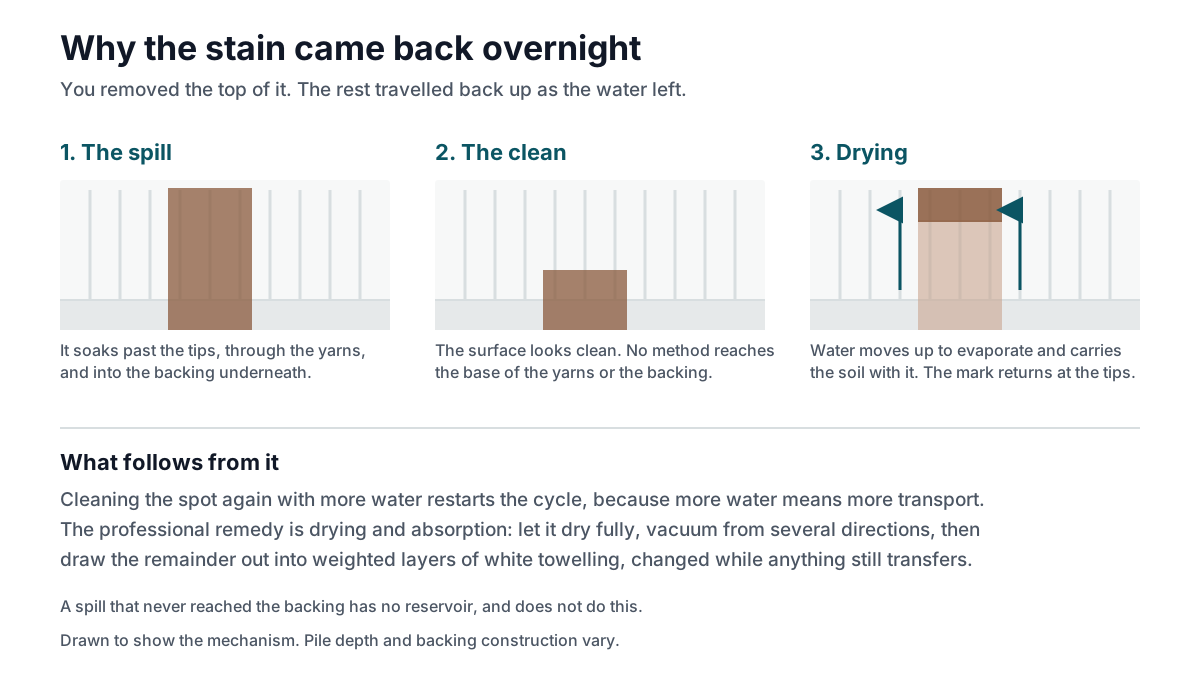
Cleaning a textile removes what the cloth or the machine can reach, and never everything: soil sits at the base of the yarns and on the backing where nothing reached it. As the fibres dry, water moves upward and outward towards the surface where it evaporates, and it carries whatever is dissolved in it. The professional term is WICKING — the upward and outward migration of water-soluble material during drying — and the result is that a spot which looked gone the previous evening is visible again the next morning. Two consequences follow, both counter-intuitive. Cleaning the spot again with more water repeats the cycle, because more water means more transport. And the depth of the original spill decides whether it happens at all: a spill that reached the backing has a reservoir; one that stayed at the tips does not. The remedy is patience and absorption rather than chemistry. Let it dry fully — the body that names the effect says at least 48 hours — vacuum from several directions, mist lightly and blot, then draw the rest into weighted layers of white towelling, changing them while anything transfers. Wicking is routinely mistaken for browning, which looks similar and is not.
Why
- Carpet is explained by Why a stain comes back after it dries
- Red wine is explained by Why a stain comes back after it dries
- Carpet extractor is explained by Why a stain comes back after it dries
Sources for this page
Sources
Consumer Floor and Furnishings Care Information: carpet topics
Institute of Inspection, Cleaning and Restoration Certification (IICRC) · Trade or professional body
Relied on for: That wicking is the upward and outward migration of water-soluble materials during drying, that cleaning cannot remove all soil at the base of the yarns and on the backing, that this soil returns to the tips and becomes visible after drying, the 48-hour drying and multi-direction vacuuming remedy, the weighted-towel step, and that it is confused with browning. (states this directly)