Scouring powder
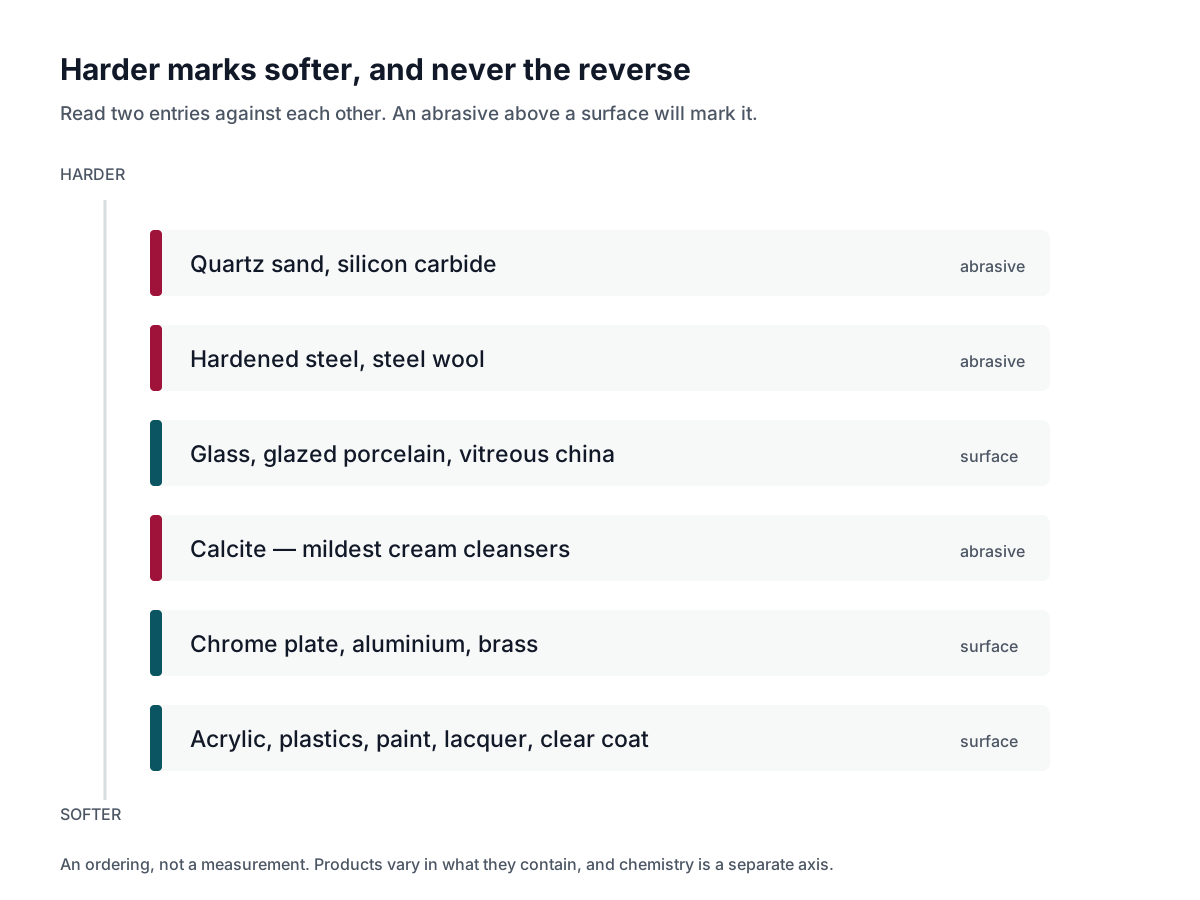
An abrasive suspended in a carrier, sometimes with bleach added. What decides whether it is safe is the hardness of the mineral against the hardness of the surface.
What not to do
Scouring powder is unsafe on Acrylic
Unsafe
Do not do this. The risk is established, and it is described below.
Precautions
- Test on an inconspicuous area first
Evidence
Strongly supported
Sources
Care & Cleaning: Toilets or Lavatories Made of Vitreous China
STERLING (Kohler Co.) · Manufacturer documentation
Relied on for: That abrasives are excluded from acrylic while soft abrasive cleaners may be used on vitreous china. (states this directly)
Scouring powder is unsafe on Plated and coated tap finishes
Unsafe
Do not do this. The risk is established, and it is described below.
Evidence
Strongly supported
Sources
Care & Cleaning: Toilets or Lavatories Made of Vitreous China
STERLING (Kohler Co.) · Manufacturer documentation
Relied on for: That abrasives are excluded from plated tap finishes. (states this directly)
KALLISTA (Kohler Co.) · Manufacturer documentation
Relied on for: That plated finishes are cleaned with a mild detergent and dried and that abrasive and harsh cleaners are excluded. (states this directly)
Scouring powder is unsafe on Mirrored glass
Unsafe
Do not do this. The risk is established, and it is described below.
Evidence
Strongly supported
Sources
Glass Technical Paper FB06-05: Proper Procedures for Cleaning Flat Glass Mirrors
National Glass Association (NGA), Mirror Division, 2019 · Trade or professional body
Relied on for: That abrasive materials are excluded from mirrors, which carry a reflective coating and an exposed backing. (states this directly)
Scouring powder is unsafe on Fingerprint-resistant stainless steel
Unsafe
Do not do this. The risk is established, and it is described below.
Evidence
Supported
Sources
How to clean and care for stainless steel surfaces
Whirlpool Corporation · Manufacturer documentation
Relied on for: That abrasive cloths, paper towels, newsprint, steel wool pads, abrasive powders, ammonia, citrus-based cleaners, vinegar-based cleaners and oven cleaners must not be used on fingerprint-resistant or black stainless finishes. (states this directly)
Scouring powder is unsafe on Control knob
Unsafe
Do not do this. The risk is established, and it is described below.
Evidence
Supported
Sources
Cleaning and Maintenance of Range
Whirlpool Corporation · Manufacturer documentation
Relied on for: That control knobs are cleaned with soap, water and a soft cloth or sponge, and that they must not be soaked or cleaned with steel wool, abrasive cleaners or oven cleaner. (states this directly)
Scouring powder is unsafe on Dishwasher filter
Unsafe
Do not do this. The risk is established, and it is described below.
Evidence
Supported
Sources
How to Clean the Dishwasher Filters
Whirlpool Corporation · Manufacturer documentation
Relied on for: That the filter is rinsed under running water with a soft brush for calcium deposits, that a wire brush or scouring pad must not be used, that it must be locked back into place, and that the dishwasher must not be operated without the filters installed. (states this directly)
Scouring powder is unsafe on Door liner
Unsafe
Do not do this. The risk is established, and it is described below.
Evidence
Supported
Sources
Cleaning the Interior of the Refrigerator
Whirlpool Corporation · Manufacturer documentation
Relied on for: That warm water with mild dish soap and a microfibre cloth is used, that gaskets are cleaned with a damp cloth and mild soap lifting the folds, that all parts must be completely dry before reinstalling, and that abrasives, window sprays, scouring cleansers, waxes, concentrated detergents, bleaches and petroleum-based cleansers must not be used on plastic parts, liners or gaskets. (states this directly)
Scouring powder is unsafe on Crisper drawer
Unsafe
Do not do this. The risk is established, and it is described below.
Evidence
Supported
Sources
Cleaning the Interior of the Refrigerator
Whirlpool Corporation · Manufacturer documentation
Relied on for: That abrasive or harsh cleaners such as window sprays, scouring cleansers, flammable fluids, cleaning waxes, concentrated detergents, bleaches and cleansers containing petroleum products must not be used on plastic parts, interior and door liners, or gaskets. (states this directly)
Scouring powder is unsafe on Fridge door seal
Unsafe
Do not do this. The risk is established, and it is described below.
Evidence
Supported
Sources
Cleaning the Interior of the Refrigerator
Whirlpool Corporation · Manufacturer documentation
Relied on for: That abrasive or harsh cleaners such as window sprays, scouring cleansers, flammable fluids, cleaning waxes, concentrated detergents, bleaches and cleansers containing petroleum products must not be used on plastic parts, interior and door liners, or gaskets. (states this directly)
Precautions
- Test on an inconspicuous area first
- Check the manufacturer's instructions
- Rinse thoroughly afterwards
- Never mix with other cleaning products
In detail
A scouring product is a mineral abrasive delivered in a powder or a cream, often with a surfactant and sometimes with a chlorine bleach in the same tub. The chemistry is usually incidental; the mineral is what does the work, and the only question that matters is whether that mineral is harder than the surface. Calcite is soft enough to clean glazed ceramic without marking it. Silica and feldspar are hard enough to scratch stainless steel, chrome plating, acrylic and glass. Because the abrasive is rarely named on the packaging, the honest general rule is to judge by the surface rather than by the product: vitreous china tolerates a soft abrasive, and the sanitaryware manufacturer says so; acrylic baths, plated tap finishes, enamelled cast iron and mirrors do not, and the same manufacturer and the glass trade say that too. A dry powder has a second, separate consideration. Crystalline silica is classed as a carcinogen by inhalation, so a mineral powder shaken out dry is a different proposition from a cream squeezed onto a cloth, and the cream is the better default for that reason alone as well as for control.
Properties
- pH
- Varies by product
What works
Scouring powder is effective against Burnt-on food and carbon deposits Supported
Why
- Scouring powder is explained by Mechanical action and abrasion
- Scouring powder is explained by Relative hardness
Sources for this page
Sources
Care & Cleaning: Toilets or Lavatories Made of Vitreous China
STERLING (Kohler Co.) · Manufacturer documentation
Relied on for: That soft abrasive cleaners may be used on vitreous china while abrasives are excluded from acrylic, enamelled cast iron and plated tap finishes. (states this directly)
Right to Know Hazardous Substance Fact Sheet: Silica, Quartz (RTK 1660)
New Jersey Department of Health, 2016 · Government or regulator
Relied on for: That crystalline silica is used as an abrasive, that its hazard is by inhalation, and that it is classed as a carcinogen. (states this directly)