Relative hardness
Whether an abrasive scratches a surface depends on which is harder. That is the entire question, and it is knowable in advance.
In detail
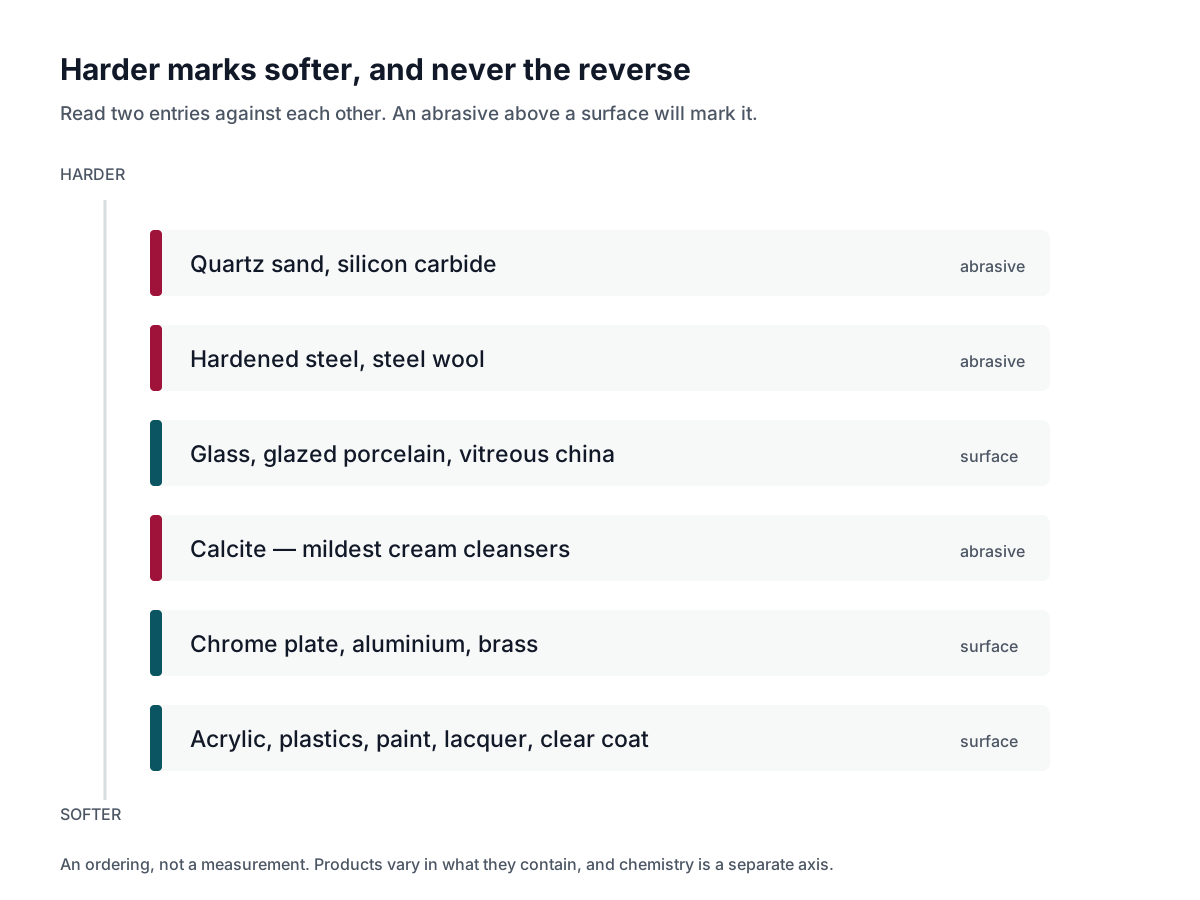
Scratching is not a property of a cleaning tool; it is a relationship between two materials. A harder material marks a softer one and never the reverse, which is why the same scouring pad leaves one surface unmarked and ruins the next. Ranking the household materials makes most compatibility questions answerable without testing. Diamond, silicon carbide and quartz sand sit at the top; hardened steel and steel wool are next; glass, glazed porcelain and vitreous china are close behind; then softer metals such as chrome plate, aluminium and brass; then acrylic, most plastics, painted finishes, lacquers and coatings near the bottom. Calcite — the mineral in the mildest cream cleansers — is soft enough to clean glazed ceramic without marking it, which is precisely why it is chosen. Two consequences follow. Steel wool marks stainless steel, glass-ceramic and chrome, because steel is harder than all of them. And melamine foam works as a very fine abrasive, so it burnishes matt paint and hazes clear coats. The rule to carry is that the abrasive must be softer than the surface, not merely 'gentle'.
Why
- Scouring powder is explained by Relative hardness
- Metal polish is explained by Relative hardness
- Ceramic hob cleaner is explained by Relative hardness
- Bone or wooden stylus is explained by Relative hardness
- Floor pad is explained by Relative hardness
Sources for this page
Sources
Right to Know Hazardous Substance Fact Sheet: Silica, Quartz (RTK 1660)
New Jersey Department of Health, 2016 · Government or regulator
Relied on for: That crystalline silica is used as an abrasive and is a hard mineral solid. (states this directly)
Care and Maintenance of Stainless Steel
British Stainless Steel Association, Stainless Steel Advisory Service, 2001 · Trade or professional body
Relied on for: That steel wool and carbon-steel implements damage stainless steel and leave iron particles which corrode. (states this directly)