Why there is a dark line along the skirting board
Not a place the vacuum missed. Air is being pulled through the carpet at that line, and the carpet is doing what a filter does.
In detail
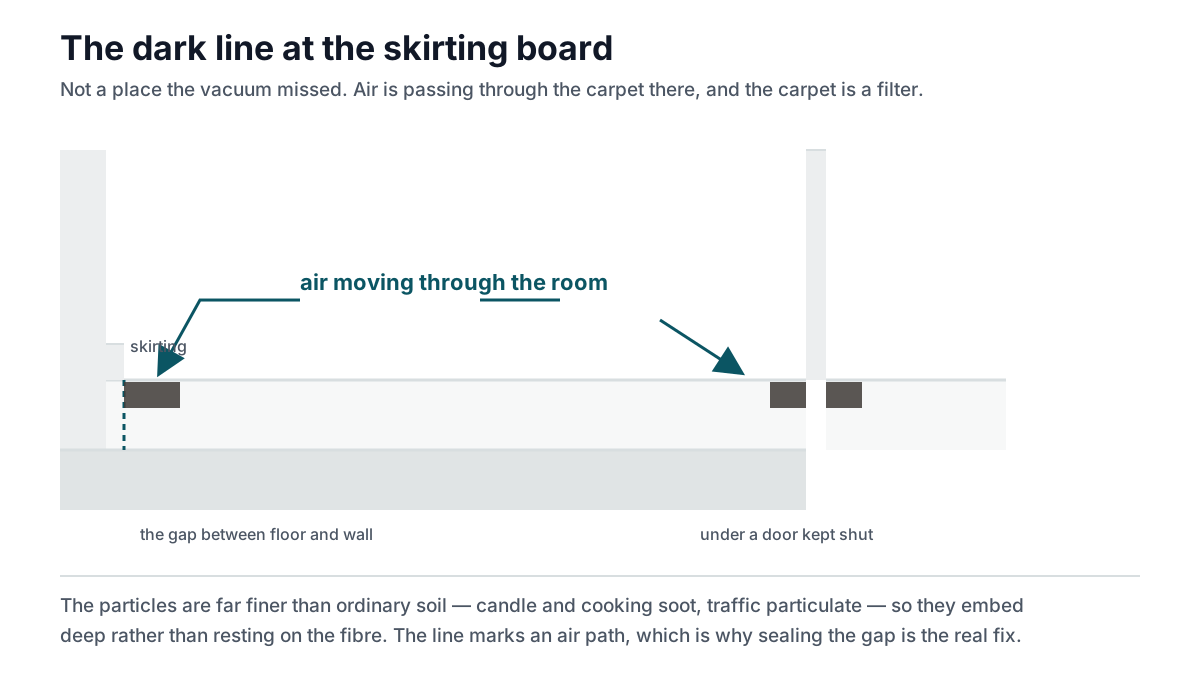
Dark bands appear where the carpet meets the skirting board, under a door that stays shut, beneath floor-length curtains, and around floor outlets and heating ducts. They are not a cleaning failure and they do not respond to more vacuuming, because they were not made by feet. Wherever air can pass between the room and the void under or behind the floor, it moves through the carpet pile, and the pile filters it — trapping the fine airborne particles that a cloth or a vacuum never encounters: soot from candles and cooking, tyre and traffic particulate, dust too small to see. The soil is exceptionally fine, which is exactly why it is hard to remove: it penetrates deep into the fibre rather than sitting on it, and it accumulates slowly enough that nobody notices the line forming. Removal is a professional job with specific chemistry, may be incomplete, and is hardest on wool and on olefin. The useful part is preventive and structural rather than chemical. The line marks an air path. Sealing gaps between floor and wall during any flooring work, changing ventilation filters, and burning fewer candles all reduce the particulate that the carpet is being asked to filter.
Why
- Carpet is explained by Why there is a dark line along the skirting board
- Filtration soil is explained by Why there is a dark line along the skirting board
- Soot is explained by Why there is a dark line along the skirting board
Sources for this page
Sources
Consumer Floor and Furnishings Care Information: carpet topics
Institute of Inspection, Cleaning and Restoration Certification (IICRC) · Trade or professional body
Relied on for: That soil filtration lines develop at skirting boards, under closed doors and curtains and near ducts, that the carpet acts as a filter catching soil particles from passing air, that the soil is exceptionally fine and embeds deeply, that removal is professional and may be incomplete, and that sealing gaps, changing filters and limiting candles are preventive. (states this directly)