Oven door seal
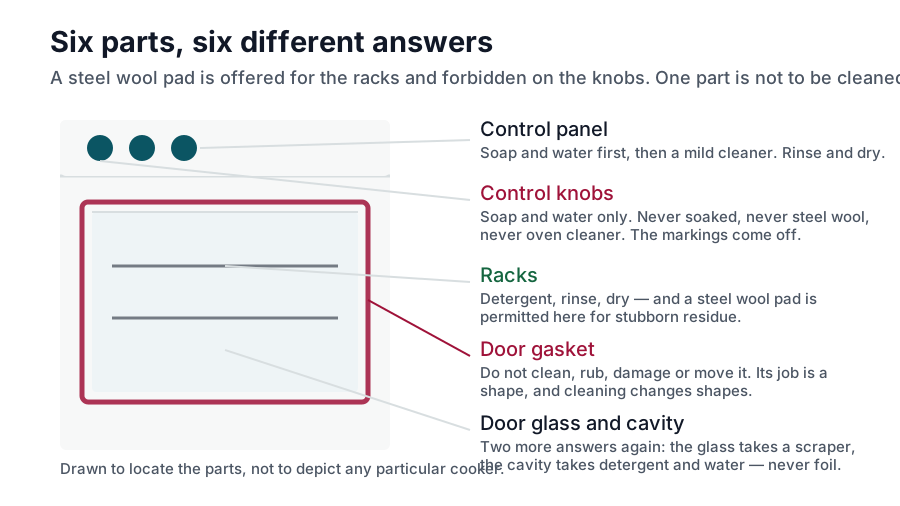
The one part of an oven the manufacturer says not to clean at all. Three zones of the same door take three different treatments.
What not to do
Oven cleaner is prohibited by the manufacturer for Oven door seal
Unsafe
Do not do this. The risk is established, and it is described below.
Evidence
Strongly supported
Sources
Use and Care & Installation Guide: Self-Cleaning Electric Range
GE Appliances · Manufacturer documentation
Relied on for: That the oven door gasket must not be cleaned because it is essential for a good seal. (states this directly)
Dry soil removal is unsafe on Oven door seal
Unsafe
Do not do this. The risk is established, and it is described below.
Not 'be careful'. The instruction is not to clean, rub, damage or move it at all.
Evidence
Supported
Sources
Cleaning and Maintenance of Range
Whirlpool Corporation · Manufacturer documentation
Relied on for: That the oven door gasket must not be cleaned, rubbed, damaged or moved. (states this directly)
Stainless steel cleaner is unsafe on Oven door seal
Unsafe
Do not do this. The risk is established, and it is described below.
The exterior procedure explicitly stops at the seal.
Evidence
Supported
Sources
Cleaning and Maintenance of Range
Whirlpool Corporation · Manufacturer documentation
Relied on for: That stainless steel exteriors are wiped in the direction of the grain, and that contact with plastic parts, trim pieces or rubber door gaskets is to be avoided. (states this directly)
Precautions
- Check the manufacturer's instructions
- Do not apply to a hot surface
Start here
What this is, what tends to go wrong with it, and what to do about it.
Made from
The science behind this: Damage versus soiling
Part of Oven.
In detail
An oven door is not one surface and the manufacturer divides it into three, which is as clear a case as there is for treating the parts separately rather than the appliance as a whole. The gasket carries an outright prohibition — do not rub or clean it — and the stated reason is the material: THE FIBREGLASS OF THE GASKET HAS AN EXTREMELY LOW RESISTANCE TO ABRASION. An intact, well-fitting gasket is described as essential for energy-efficient operation and good baking results, and one that is worn, frayed, damaged or displaced should be REPLACED rather than cleaned. One detail prevents a common misdiagnosis: the gasket is DESIGNED with a gap at the bottom to allow proper air circulation, so that gap is not a fault and not something to seal up. The area outside the gasket may be cleaned with a scouring pad — a permissive instruction sitting centimetres from an absolute ban — while the door exterior must not meet oven cleaners, cleansing powders or harsh abrasives. Anyone cleaning the oven door as one object will get at least one of the three wrong.
Why
- Oven door seal is explained by Damage versus soiling
Related
- Oven door seal is made from Appliance seal rubber
Hacks and claims involving this
- Using oven cleaner in a self-cleaning oven Does not work
Sources for this page
Sources
Use and Care & Installation Guide: Self-Cleaning Electric Range
GE Appliances · Manufacturer documentation
Relied on for: That the gasket must not be rubbed or cleaned because its fibreglass has extremely low resistance to abrasion, that an intact gasket is essential for efficient operation and a worn or displaced one should be replaced, that it is designed with a gap at the bottom for air circulation, and that the area outside it may be cleaned with a scouring pad. (states this directly)